ServicesTankless Water Heaters
Tankless Water Heater Installation in Eagleville
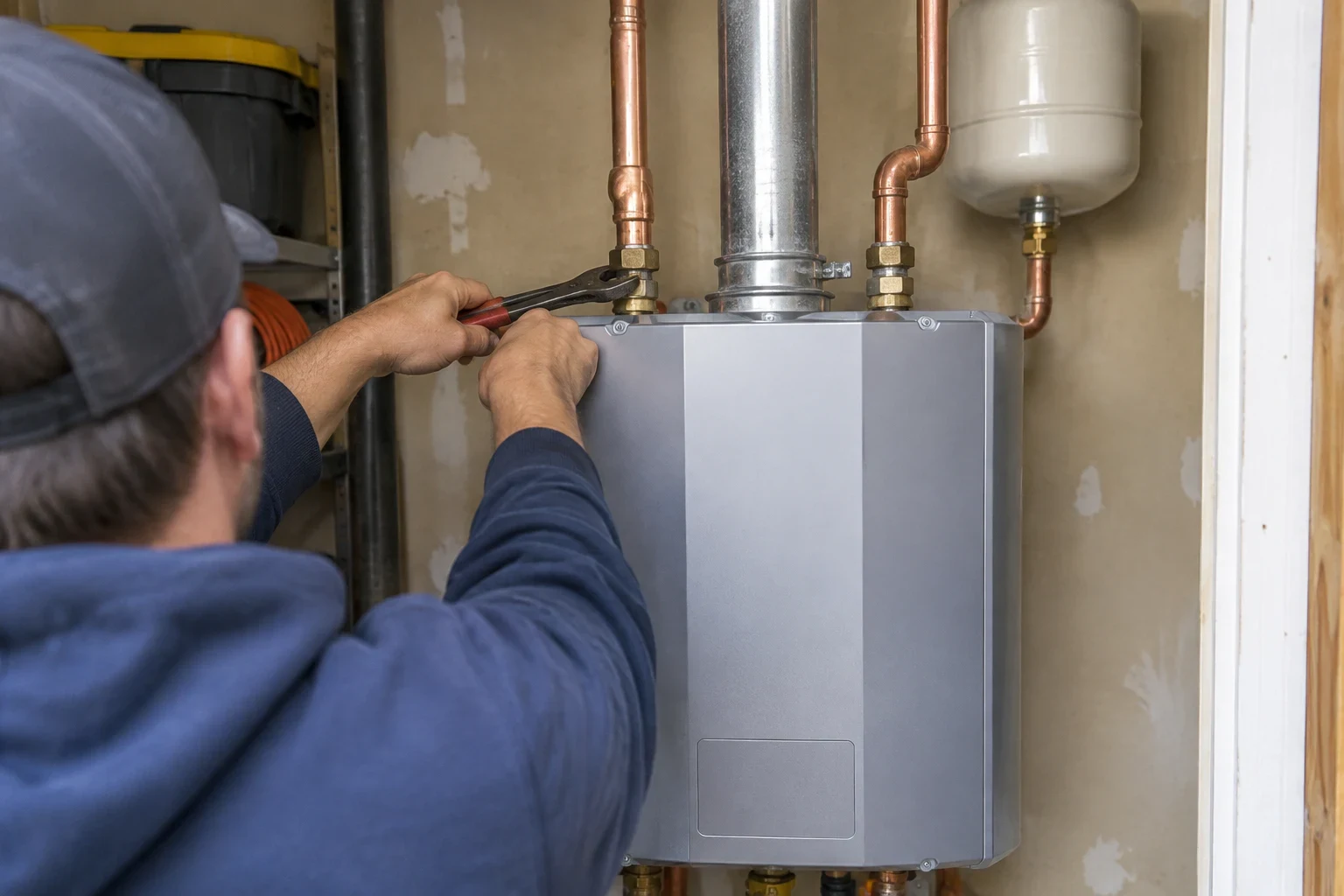
A tankless water heater gives your home hot water on demand and frees up the floor space a tank used to take. We size the unit to how your family actually uses water, explain what your gas line, venting or electrical panel will need, and give you the full picture before we start.
Is Tankless the Right Call for Your Home?
A tankless unit heats water as it flows through, so it never runs out the way a 40 or 50 gallon tank does. It uses less energy because it is not keeping a tank hot all day, and a well-kept unit typically lasts longer than a tank. The tradeoff is a higher upfront cost and, in many homes, some changes to gas piping, venting or electrical service.
We will tell you plainly if tankless makes sense. For a larger family that runs showers back to back, it usually does. For a small household with a tank that still has years left, a new tank may be the better value, and we will say so.
The gas, water and vent hookups on your new heater are handled under our Tennessee CMC-A plumbing license and built to code. Our company is licensed and insured, which protects you and your home while the work is underway.
What Your Installation Includes
- Sizing by flow, not guesswork
- We count your fixtures, ask how many showers run at once, and size the unit by gallons per minute and temperature rise. Groundwater runs colder in winter, so we size for January, not July.
- Gas line check and upgrades
- Gas tankless units draw far more fuel at full fire than a tank burner. We check your meter and pipe size and tell you up front if a larger line is needed.
- Proper venting
- Condensing units vent through PVC and non-condensing units need stainless steel. We route the vent to code and seal every wall or roof penetration.
- Electric unit planning
- Whole-home electric models need several large breakers and sometimes a panel upgrade. We confirm the electrical load before you commit, so there are no surprises on install day.
- Service valves and old tank removal
- We install isolation valves so the unit can be flushed easily each year, then haul away your old water heater.
- Startup and walkthrough
- We fire the unit, set the temperature, test every fixture and show you how the controls and flush valves work.
Signs It Is Time to Consider Going Tankless
Hot water runs out
If the third shower of the morning turns cold, your tank is undersized for your household. Tankless keeps up as long as it is sized right.
Your tank is aging
Most tank heaters wear out somewhere around the ten year mark. Planning a switch now beats replacing in a rush after a failure.
Rust, rumbling or water at the base
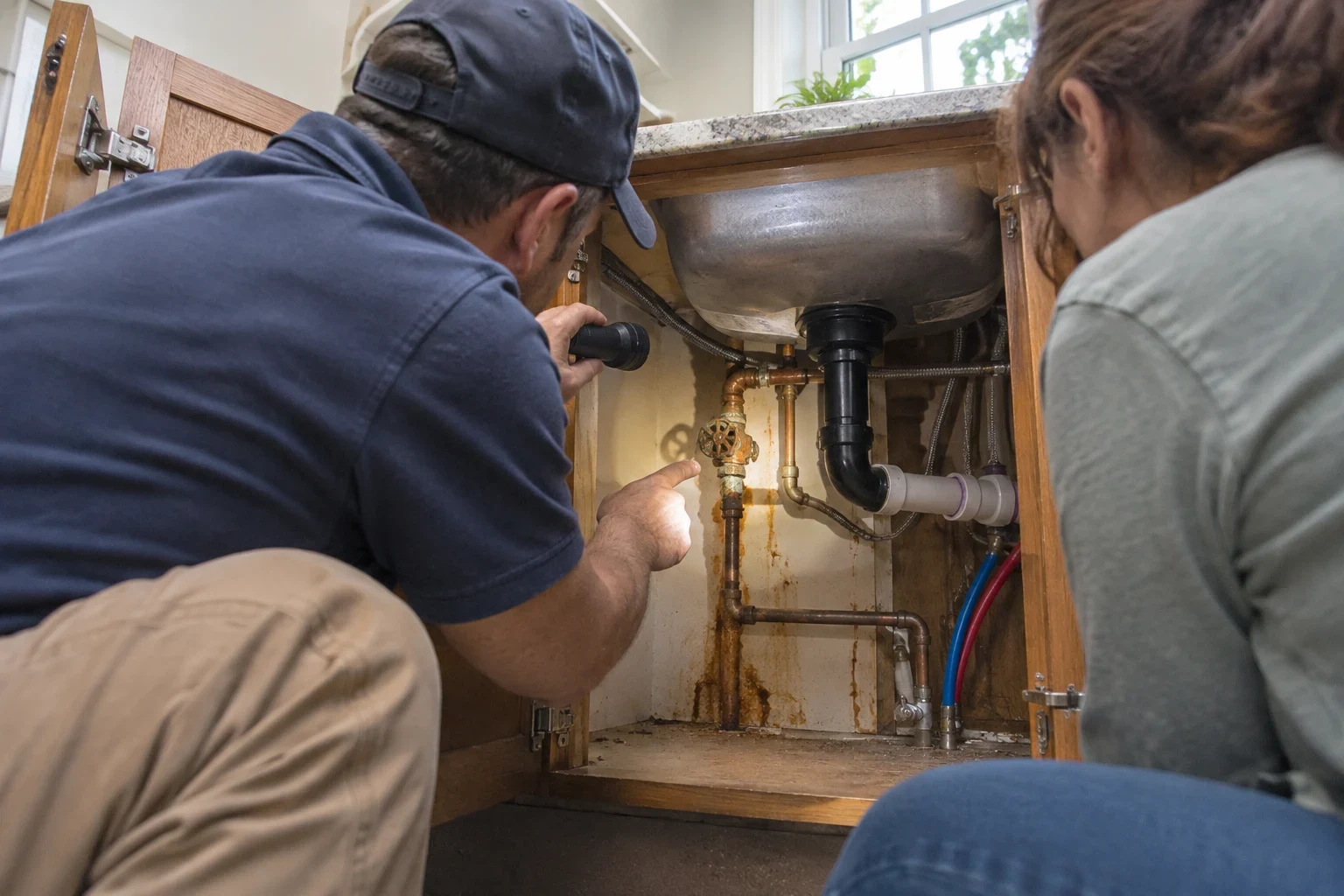
Rusty hot water, popping sounds from sediment, or moisture around the tank all point to a heater near the end. If the tank has failed and water is spreading, call us any hour.
You need the space back
A wall-mounted unit is about the size of a carry-on suitcase, which can free up a closet, garage corner or utility room.
Energy bills keep creeping up
A tank reheats water around the clock. Heating only what you use can trim the water heating portion of your bill.
What Moves the Cost of a Tankless Install
The price tag on the heater is only one piece. The bigger swing usually comes from what your home needs to support it, and we explain each of those pieces before you decide anything. Estimates are free and financing options are available. We take cash as well as all major credit cards.
Which fuel the unit runs on
A natural gas or propane model often calls for a bigger supply line plus new venting. An electric model needs no vent, but your panel may need an upgrade to carry the load.
Unit size and type
A higher flow unit for a larger home costs more. Condensing models cost more to buy, though they vent through PVC, which is less expensive to run than stainless steel.
Location change
Putting the new unit where the old tank stood keeps things simple. Moving it means running new water lines, gas piping or a different vent route.
Water quality
Hard water builds scale inside the heat exchanger. A softener or our whole home water filtration can protect the unit, and we will tell you honestly whether your water needs it.
How Installation Day Goes
- 1
Free estimate and site check
We look at your current heater, gas or electric service, venting path and where the new unit can mount. You get a written estimate with every item spelled out line by line.
- 2
Paperwork and a date
If your project requires a permit, we file for it ourselves, then set an install day that fits your schedule. Most jobs wrap up in one day.
- 3
Removal and mounting
We shut off water and fuel, drain and remove the old tank, then mount the new unit and run the water, gas and vent connections. Floors and walkways get covered while we work.
- 4
Testing and cleanup
We check for gas and water tightness, fire the unit, test hot water at your fixtures and clean up. If an inspection is required, we coordinate it.
Tankless Water Heater Questions
Will a tankless heater really give me endless hot water?
Yes, as long as it is sized for how many fixtures run at the same time. An undersized unit will drop temperature when the shower and washer run together. That is why we size by flow rate and winter water temperature, not by house square footage.
Can I switch from a tank to tankless in the same spot?
Usually, yes. The catch is that the gas line, vent or electrical service often needs to change, even if the location stays the same. We check all three during the estimate so you know exactly what is involved.
How much maintenance does a tankless unit need?
The main chore is a yearly flush that rinses mineral buildup out of the heat exchanger. Homes with hard water may need it a bit more often. We install service valves so the flush goes quickly, and staying on schedule does more for the unit's lifespan than anything else.
Should I pick a gas model or an electric one?
When your house already has natural gas or propane service, gas tends to win for whole-home use because it can heat a larger volume of water at once. Electric is a good fit where there is no gas and the panel has spare capacity. During the estimate we compare both for your setup and give you our honest pick.
Will hot water take longer to reach my faucet?
A tankless unit takes a few seconds to fire, so you may notice a short delay at faucets far from the heater. If that bothers you, we can talk about a recirculation option during your estimate.
Ready to Talk Tankless?
Tell us about your home and how your family uses hot water, and we will give you a straight answer on whether tankless fits. If your old heater has already quit, we answer around the clock.