ServicesWhole Home Water Filtration
Whole Home Water Filtration in Eagleville, TN
We install whole home water filtration that treats every faucet, shower and appliance in your home. Before we recommend anything, we test your water and tell you plainly what's in it, what a system will fix and what it won't. Then the choice is yours.
What a whole home system does, and when it's worth it
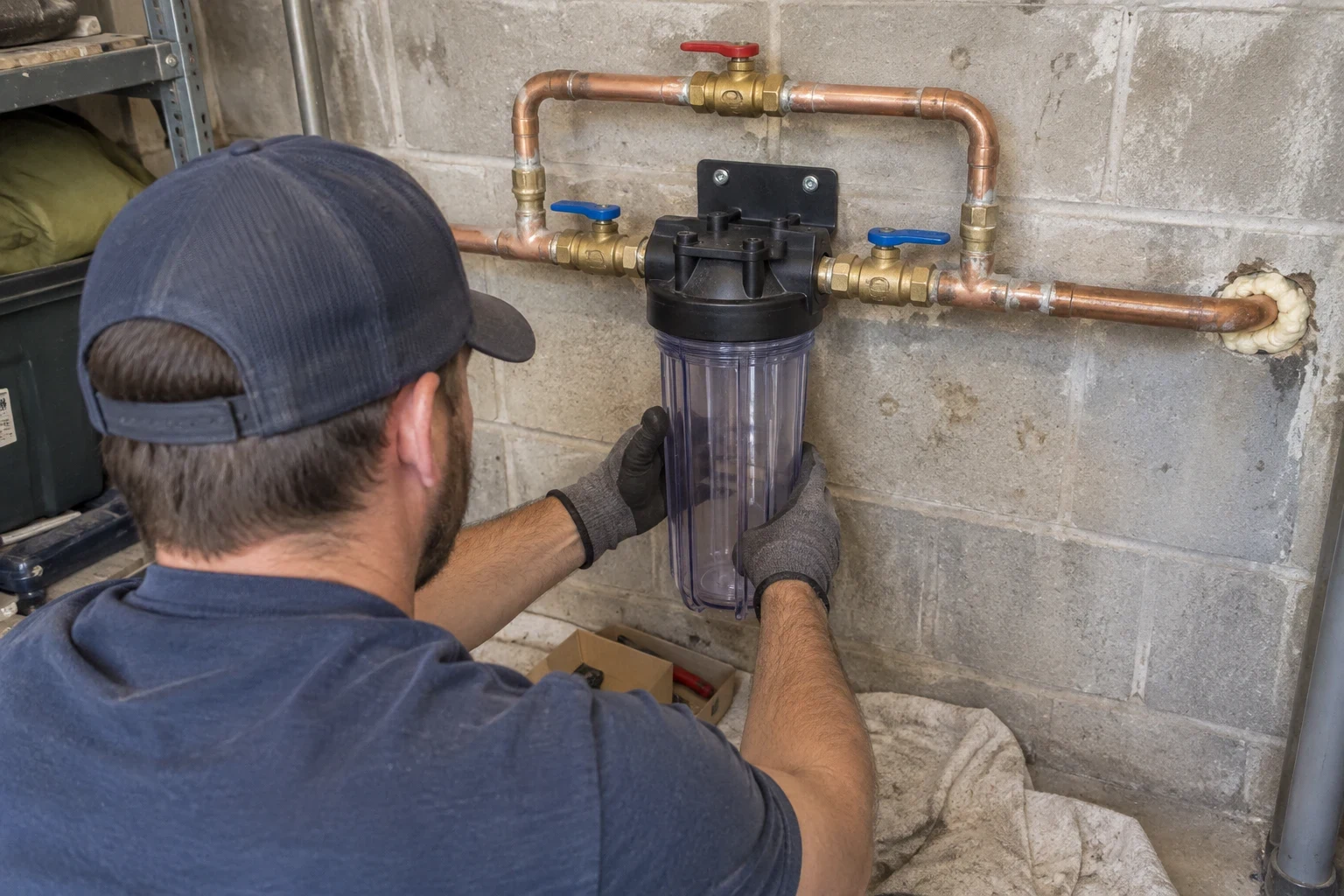
A whole home system, sometimes called a point-of-entry system, sits where the main water line comes into your home. Everything after it gets treated water: the kitchen, the bathrooms, the laundry and the water heater. A pitcher or under-sink filter only cleans water at one faucet.
It makes sense when the problem shows up all over the house. Think chlorine smell in every shower, scale on every fixture or rust stains in the tubs. If your only complaint is how drinking water tastes, an under-sink unit may be enough, and we'll say so.
The limestone under Middle Tennessee often means hard water, and hard water lays scale inside water heaters, dishwashers and washing machines. Treating it at the main helps those appliances last longer and keeps fixtures easier to clean.
What the installation includes
- An on-site water test
- We check hardness, chlorine, iron and pH at your tap before suggesting any equipment. You see the readings with us, so the recommendation makes sense.
- A system sized for your home
- Flow rate matters more than most people expect. We size the unit to your bathrooms and how your family uses water, so pressure holds up when the shower and washer run at the same time.
- Bypass and shutoff valves
- We add a bypass so you still have water during cartridge changes or service, plus shutoffs on both sides of the unit.
- A clean tie-in at the main
- The system goes where the line enters your home, usually a garage, utility room or crawlspace. Our company holds a Tennessee CMC-A plumbing license, and we're licensed and insured, so this connection is handled properly.
- A walkthrough before we leave
- We show you how to change filters or check softener salt, how often to do it and roughly what upkeep involves. No guessing later.
Signs your home could use whole home filtration
White crust on fixtures
Chalky buildup on faucets, showerheads and glass doors is hardness minerals. If you're scrubbing it off every week, the same scale is building up inside your pipes and appliances.
Chlorine smell in the shower
Treated municipal water carries chlorine. Some people notice it on skin and hair, and a carbon filter at the main takes it out for the whole house.
Orange or rust stains
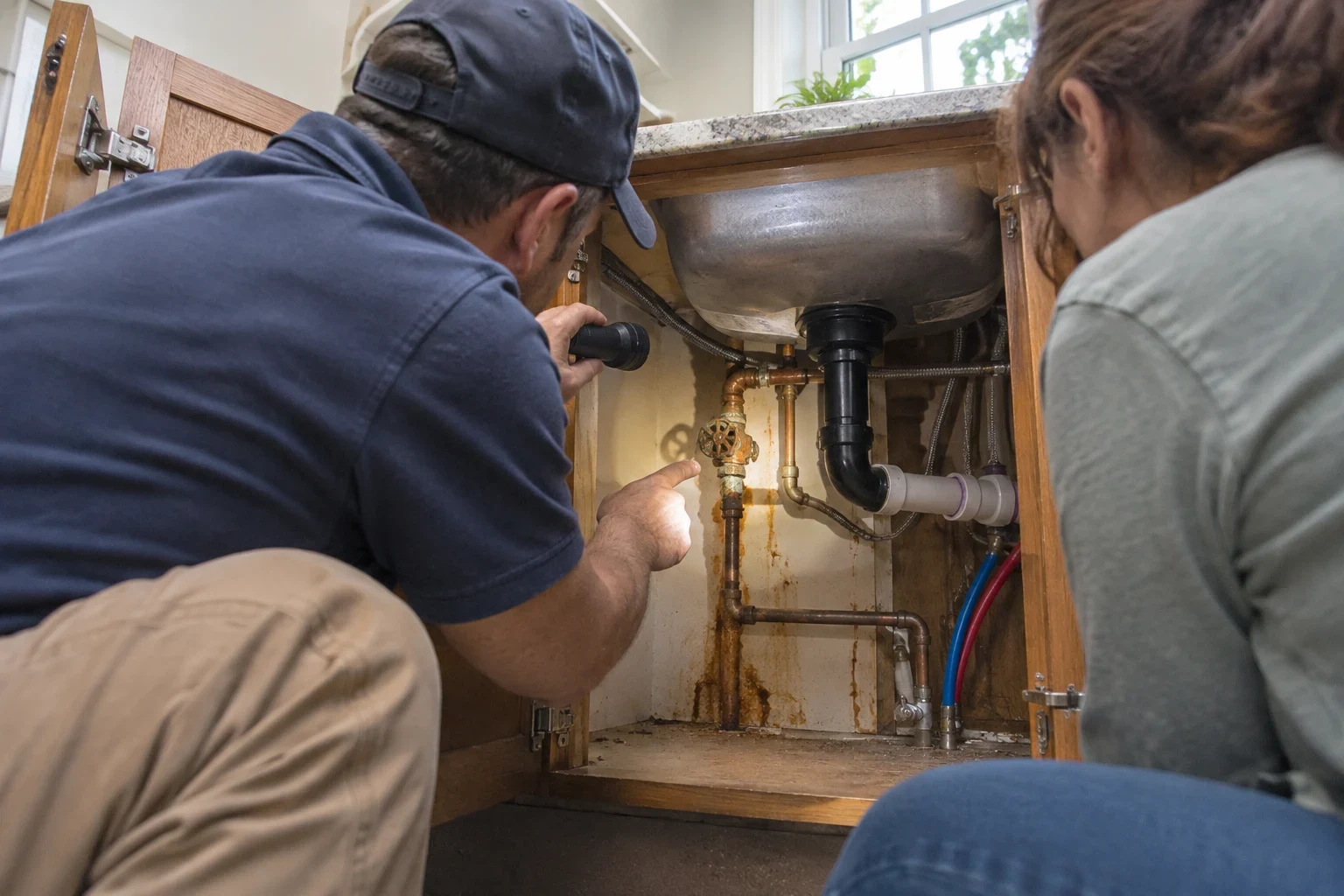
Stains in toilets, tubs and laundry usually point to iron. It needs a filter made for iron; a standard sediment cartridge won't stop it.
A rotten egg smell
That's often hydrogen sulfide, common with well water. If you only smell it on the hot side, the cause may be the water heater's anode rod instead, and we'll look at that before anything else.
Sand in faucet screens
If you keep unscrewing aerators to rinse out fine grit, a sediment filter at the main can catch it before it reaches faucets and appliance valves.
A popping water heater
Rumbling or popping from the tank often means scale has settled on the bottom. Softening the water slows that from happening again.
How a filtration install goes
- 1
Start with a phone call
Tell us what you're noticing, and we'll set a time to come out for a free estimate.
- 2
Test and recommend
We test the water, look at where your main line enters and give you a written estimate with your options side by side. If a simpler fix would do the job, you'll hear it from us.
- 3
Install day
We protect the floor, shut off the water and cut the system into the main. Most homes are without water for a few hours, and we tell you ahead of time so you can plan around it.
- 4
Flush, check and clean up
We flush new media, check for drips at every joint, confirm pressure at your fixtures and retest the water. Then we clean up the work area before we go.
What moves the price
Before any work starts, you get a written estimate that shows what you're paying for. Most of the total comes down to what your water needs treated and how easy your main line is to reach. If spreading the cost out helps, we offer financing options, and we take cash as well as all major credit cards.
- What's in your water
- Chlorine alone calls for a simpler setup than hardness plus iron. Each problem may need its own stage of treatment.
- Home size and flow
- More bathrooms and heavier use mean a larger unit, so pressure stays steady.
- Where the line comes in
- An open garage wall is quick work. A tight crawlspace or a line that needs rerouting adds labor.
- Drain and power needs
- Softeners and some iron filters flush themselves and need a nearby drain, and some need an outlet. If those aren't close, we add them.
- Upkeep over time
- Cartridge systems cost less up front but need regular replacements. We lay out the ongoing cost of each option so you can compare honestly.
Water filtration questions we hear most
Something not covered here? (615) 235-7163
Will a whole home filter lower my water pressure?
A properly sized system shouldn't cause a noticeable drop. Pressure problems usually come from undersized units or clogged cartridges. We size for your peak use and show you when to change filters.
Does a softener clean the water, or just soften it?
It only softens. A softener pulls out calcium and magnesium, the minerals behind scale, while a filter handles chlorine, sediment or iron. Some homes need one, some need both, and your water test shows which.
Do I need this if I'm on city water?
City water is treated to be safe, but it can still be hard and taste of chlorine. Whether a whole home system is worth it depends on what bothers you. We'll give you a straight answer after testing.
How often do filters need changing?
Sediment and carbon cartridges are typically changed a few times a year to once a year, depending on the system and your water use. Softeners need salt added regularly. We'll leave you a simple schedule.
Can you install it at the same time as a new water heater?
Yes, and it's a good time to do it, since filtered or softened water helps protect new equipment. If you're also planning a tankless unit, ask about our tankless water heater installation when you call.
Find out what's in your water
We'll test your water, explain what we find in plain terms and give you a free written estimate. For anything urgent with your plumbing, we also offer 24/7 emergency plumbing service.